
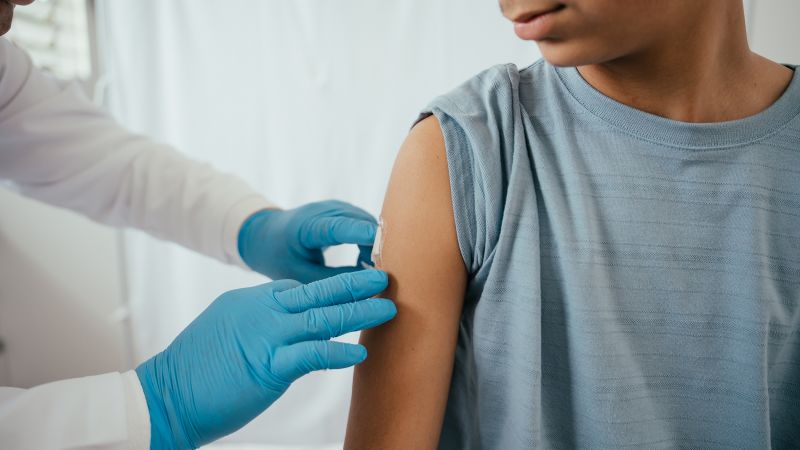

A vaccine long framed as protection againstcervical cancer in womenis now showing clear benefits for men.
Boys and young men who received the human papilloma virus, or HPV, vaccine had about half the risk of developing related cancers compared with those who were unvaccinated, according to a large new study published inJAMA Oncology.
That’s why parents and young men should know more about what HPV is and what cancers it’s linked to. Why is the HPV vaccine important for boys and young men, and when should they receive it? What should parents be considering as they debate whether to give their children this vaccine?
What is HPV? What you should know about vaccines, symptoms and cancer risks
To help with these questions, I spoke with CNN wellness expert Dr. Leana Wen. Wen is an emergency physician and adjunct associate professor at George Washington University. She previously was Baltimore’s health commissioner.
Dr. Leana Wen:HPV is an extremely common virus transmitted through intimate skin-to-skin contact.The vast majorityof those who are sexually active will be exposed to it at some point in their lives.
This applies to both men and women. According to theNational Cancer Institute, nearly all sexually active people are infected with HPV within months to a few years of starting sexual activity. About half of these infections are with a high-risk HPV type that increases the likelihood of developing cancers. Most infections go away on their own as the immune system clears them, but some persist and can cause cellular changes that can become cancerous over time.
US funding cuts imperil global efforts to eliminate cervical cancer
Wen:HPV is associated with a range of cancers in both men and women. In women, the most well-known is cervical cancer, but HPV can also cause cancers of the vagina and vulva. In men, HPV is linked to cancers of the penis, anus and the head and neck.
Over 90%of anal cancer is caused by HPV. Oropharyngeal cancer, also called throat cancer, is highly associated with HPV as well, with about 70% attributed to HPV. And more than 60% of penile cancer is caused by HPV.
Cervical cancer screening just got easier. A doctor explains why this change matters
Wen:This study included a global database of more than 615,00 males ages 9 to 26 who received the nonavalent HPV vaccine and over 2 million who did not. After adjusting the groups to make them comparable, the researchers analyzed about half a million individuals in each group.
They found that men who were vaccinated had a significantly lower risk of developing HPV-related cancers. Overall, vaccination was associated with about a 46% reduction in risk, meaning those who received the vaccine had roughly half the risk compared with those who were unvaccinated.
The benefit was seen across different groups studied. Those vaccinated between ages 9 and 14 had about a 42% lower risk, while those vaccinated between 15 and 26 had about a 50% lower risk.
Wen:The initial focus of the HPV vaccine was driven by the clear and direct link between HPV and cervical cancer, which is a major global health issue. According to theWorld Health Organization, cervical cancer is the fourth most common cancer in women globally, causing more than 660,000 new cases and around 350,000 deaths in 2022.
Early clinical trials and public health campaigns prioritized preventing this specific cancer, so vaccination programs were first rolled out for girls. Over time, as more evidence accumulated about the burden of HPV-related disease in men, recommendations have expanded to include boys. However, public perception has lagged behind the science, and many people still think of this vaccine as primarily targeted for females.
HPV vaccine: Some studies say one and done might be better
Wen:TheUS Centers for Disease Control and Preventionrecommends routine vaccination of preteens at 11 or 12 years old. It states that the vaccination series can be started at as early as age 9. The HPV vaccine can be given at the same time as other vaccines.
TheAmerican Academy of Pediatricshas a slightly different guidance, which is to recommend routine HPV vaccination for all adolescents starting between 9 and 12 years old. Its emphasis on earlier years focuses on the goal to vaccinate before any exposure to HPV occurs. According to the AAP, there isno known downsideto starting HPV vaccinations early. The immune response is strong at younger ages, and there has not been evidence of significant waning protection.
Cancer prevention report finds US smoking rates continue to fall but HPV vaccination rates stall
Wen:Yes, and this is a crucial point. While earlier vaccination is ideal, this study and others show that there is significant benefit for those who may not have gotten the shots earlier and then got vaccinated later. That’s because the vaccine protects against multiple strains of HPV, and individuals may not have been exposed to all of them earlier. Catch-up vaccination can still provide important protection.
High-risk HPV infections in men may be associated with slightly higher levels of dead sperm cells, new study suggests
Wen:Those who were not vaccinated at the recommended timeline are recommended to receive catch-up vaccinations through age 26.
For those ages 27 to 45 who are unvaccinated or not fully vaccinated, the CDC recommendsshared clinical decision-making. The vaccine is licensed for these age groups, and patients may choose to receive it at these ages in consultation with their health care provider.
Patches of low vaccination in the US are becoming bigger, riskier holes
Wen:I would emphasize that this vaccine is about preventing cancer. It protects against infections that can lead to serious disease many years later.
We now have strong evidence that it benefits everyone. The safety profile of the vaccine is well-established, and the effectiveness in preventing HPV-related disease is very high. As a mom of two children, choosing vaccination is an opportunity to reduce the risk of serious illness for our children in the future.
© 2026 Cable News Network. A Warner Bros. Discovery Company. All Rights Reserved.CNN Sans ™ & © 2016 Cable News Network.
Scan the QR code to download the CNN app on Google Play.
Scan the QR code to download the CNN app from the Apple Store.
By clicking "Agree", you have read and agree to theTerms of Useand agree to the collection and use of your information by cookies and similar technologies, as set forth in ourPrivacy Policy.